Answer first
A speaker-labelled Instagram transcript can make an interview or conversation easier to scan. This is sometimes called speaker diarization, but the label can still attach a sentence to the wrong person when voices overlap, a question is answered quickly, or the audio is noisy. Create a local Instagram transcript, then verify the speaker changes in the original video before quoting or publishing it.
When labels are most useful
- Two people take clear turns and their voices are easy to distinguish.
- The video has short pauses between answers.
- You need to find a quote or edit point before doing a detailed review.
When a label is a warning, not an answer
- Two speakers talk at the same time or finish each other's sentences.
- A guest is off camera, far from the microphone, or heavily filtered.
- Music, applause, or a cut changes the acoustic scene.
- Several voices have similar pitch, speed, or accent.
A practical speaker-label review
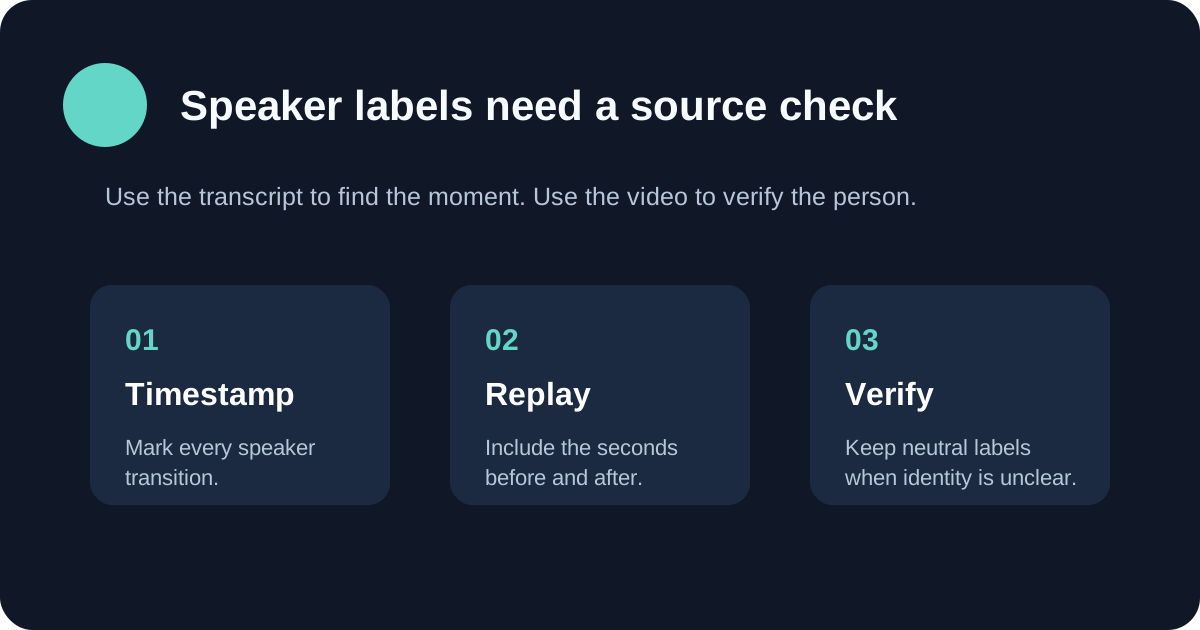
- Keep timestamps in the export and mark every speaker transition.
- Replay a few seconds before and after each transition, not just the sentence itself.
- Check the video for visible mouth movement when the audio is ambiguous.
- Use neutral labels such as Speaker 1 and Speaker 2 unless identity is independently known.
- For a published quote, save the timestamp and note whether the line was verified.
What to do with uncertain lines
Do not silently assign an uncertain sentence to the more famous or more visible person. Mark it as unclear, trim the quotation, or return to the source clip. This preserves the useful part of a transcript without turning an automated guess into a claim.